+86-576-82646666
Zhejiang Danau Industrial Co., Ltd.

Industry News

Home / News / Industry News / Pressure Washer Pump Technology Guide: Triplex Plunger and Piston Pump Selection

Pressure Washer Pump Technology Guide: Triplex Plunger and Piston Pump Selection

2026-04-09

Introduction: The Critical Role of Pump Technology in Industrial Cleaning

The global pressure washer market has experienced remarkable growth, valued at USD 3.07 billion in 2023 and projected to reach USD 3.96 billion by 2029, growing at a CAGR of 4.32% . As industries worldwide prioritize cleanliness, efficiency, and operational reliability, understanding the core technologies behind gas-powered pressure washers—specifically triplex plunger pumps and piston pumps—has become essential for procurement professionals, maintenance managers, and business owners.

This comprehensive guide explores the technical distinctions between triplex plunger pumps and piston pumps, examines what customers search for when researching gas-powered pressure washer factories, and addresses the most pressing maintenance concerns that impact equipment longevity and operational costs. Whether you're sourcing equipment for construction sites, automotive facilities, or industrial manufacturing plants, this analysis provides the technical insights necessary for informed decision-making.

Triplex Plunger Pumps vs. Piston Pumps: Technical Distinctions and Applications

What is a Triplex Plunger Pump?

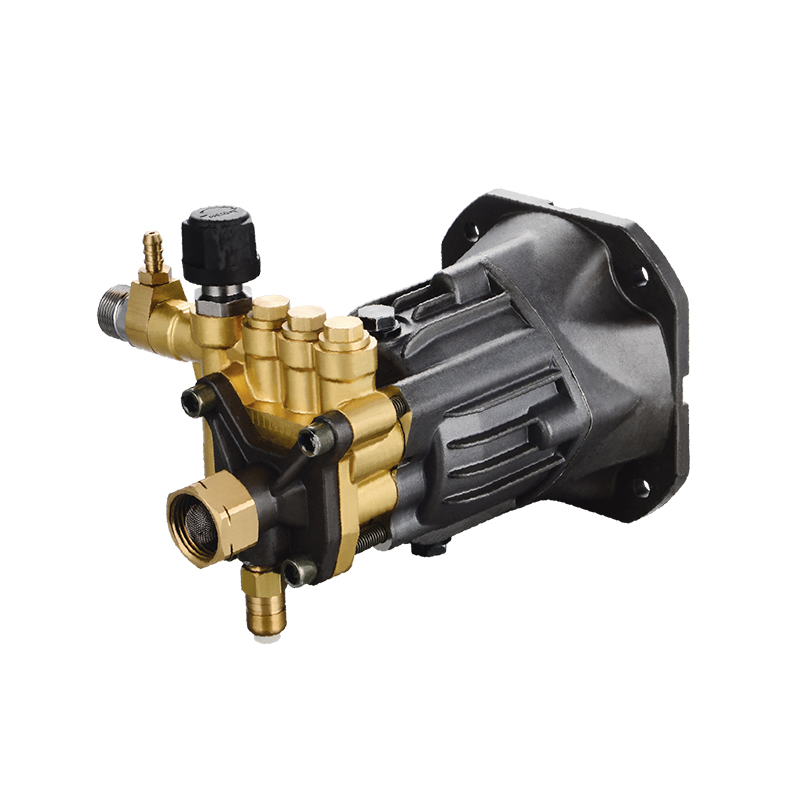
A triplex plunger pump represents the gold standard in high-pressure pumping technology. This positive displacement pump utilizes three synchronized plungers that operate in sequence to deliver continuous, high-pressure fluid flow . The triplex design ensures smoother operation with significantly reduced pulsation compared to single or duplex pump configurations, making it ideal for demanding industrial applications.

The working mechanism involves three reciprocating plungers moving within cylinders. As each plunger completes its intake stroke, drawing fluid into the pump chamber, the subsequent plunger begins its discharge stroke, expelling fluid under high pressure through the outlet valve . This overlapping action creates a nearly continuous flow with minimal pressure fluctuations—a critical advantage in precision cleaning applications.

Key Technical Specifications:

  • Pressure Range: Up to 700 kg/cm² (approximately 10,000 PSI)
  • Flow Rate: Directly proportional to strokes per minute (SPM)
  • Power End: Features heavy-duty crankshafts, self-lubricated connecting rods, and precision-machined crossheads to minimize side thrust
  • Materials: Concentric ceramic plungers and preset packings ensure durability under challenging conditions

Piston Pump Fundamentals

While often confused with plunger pumps, piston pumps operate on similar positive displacement principles but feature distinct design characteristics. Piston pumps typically incorporate pistons with sealing rings that move within cylinders, contrasting with plunger pumps where the plunger itself moves through a stationary seal .

In pressure washer applications, the terms are sometimes used interchangeably, but technical distinctions matter for maintenance and performance expectations. Piston pumps generally excel in applications requiring lower pressure ranges and higher flow rates, while plunger pumps dominate ultra-high-pressure scenarios.

Industrial Applications: Where Triplex Plunger Pumps Excel

The versatility of triplex plunger pumps extends across numerous industries, each with specific performance requirements:

Oil and Gas Industry

In oilfield operations, triplex plunger pumps handle critical tasks including water injection for enhanced oil recovery and pipeline pressure testing . The high-pressure stability ensures operational safety, preventing pipeline leakage risks caused by pressure fluctuations. For chemical injection applications, such as methyldiethanolamine (MDEA) transportation in amine desulfurization units, these pumps deliver consistent performance at pressures up to 1,200 PSIG .

Industrial Cleaning and Surface Preparation

High-pressure deburring and surface derusting in automotive parts manufacturing and construction machinery maintenance rely on triplex plunger pumps to deliver water flow at 50-100 MPa . When equipped with specialized nozzles, these systems achieve cleaning efficiency more than 40% higher than conventional low-pressure methods.

Food and Pharmaceutical Processing

Stainless steel triplex plunger pumps meet stringent food-grade hygiene standards (including 3A certification) for high-pressure transportation of food raw materials such as jams and syrups . Clean-in-place (CIP) systems for pharmaceutical equipment depend on these pumps for contamination-free operation.

Environmental and Agricultural Applications

Municipal sewage treatment facilities utilize triplex plunger pumps for high-pressure sludge dewatering. In agriculture, these pumps work with atomizing nozzles to achieve high-pressure pesticide spraying, improving droplet uniformity by 30% and reducing environmental pollution .

Customer Search Behavior: What Buyers Research Beyond Basic Product Terms

Understanding customer search patterns reveals critical insights for both SEO strategy and content development. When researching gas-powered pressure washer factories and pump technologies, potential buyers consistently seek information about:

Manufacturer Verification and Factory Assessment

Prospective buyers prioritize supplier reliability verification before placing orders. Search queries frequently include:

  • Factory inspection protocols and facility size requirements (suppliers with 10,000+ m² factories demonstrate CNC machining capabilities and quality control labs)
  • Third-party audit reports for ISO/API compliance
  • On-time delivery metrics (≥95%) and average response times (≤4 hours)
  • Sample testing protocols and spare parts availability

Comparative Performance Analysis

Customers actively research technical comparisons, including:

  • Axial vs. Triplex Pump Performance: Triplex pumps demonstrate 10x longer lifespan, superior repairability, and operational flexibility compared to axial variants
  • Pressure and Flow Specifications: Understanding PSI/GPM configurations for specific applications
  • Material Compatibility: Queries about ceramic plungers, duplex steel components, and seal materials for aggressive fluids

Maintenance and Troubleshooting Solutions

Maintenance-related searches dominate post-purchase research, with 90% of pump issues resolvable through systematic diagnostic approaches . Common search patterns include:

Symptom-Based Troubleshooting:

  • "Pressure washer pump sputtering or surging" (indicating air leaks or restricted water flow)
  • "Low but steady pressure problems" (typically clogged nozzles or incorrect nozzle sizing)
  • "No pressure at all" (unloader valve issues or major water blockages)
  • "Pulsating pressure" (air in system or failing check valves)

Preventive Maintenance Protocols:

  • Oil change intervals (every 50-100 hours of operation)
  • Filter inspection and cleaning procedures
  • Winterization techniques to prevent cracked manifolds
  • Cavitation prevention strategies

Maintenance Excellence: Extending Pump Lifespan and Reducing Downtime

The Economics of Preventive Maintenance

Industry data reveals compelling evidence for proactive maintenance investment. Pumps serviced every 50 hours can last up to 2,000 hours—three times longer than pumps maintained only when failures occur . Furthermore, a Power Washers of North America (PWNA) survey indicated that 62% of commercial contractors admitted to skipping oil changes, directly contributing to a 45% spike in repair calls during peak seasons .

Critical Maintenance Procedures

Routine Oil Management:

Pressure washer pumps require specific non-detergent pump oil. Using automotive motor oil causes seal foaming and failure, leading to catastrophic water intrusion into the crankcase . Oil changes should occur every 50-100 operating hours or at least once per season.

Water Supply Optimization:

Cavitation—pump damage caused by insufficient water supply—remains entirely preventable. Best practices include:

  • Utilizing 3/4-inch diameter garden hoses kept as short as possible
  • Ensuring minimum flow rates of 2.5 GPM for standard pressure washers
  • Eliminating all potential air leaks through tight connections and intact rubber washers

Filter and Nozzle Maintenance:

The inlet screen requires inspection and cleaning before every use. For contractors operating in areas with well water or sediment-heavy sources, this protocol is absolutely critical for pump longevity . Nozzle selection must match the machine's PSI and GPM specifications; incorrect sizing creates excessive backpressure and premature system wear.

Professional Service Indicators

Certain conditions mandate professional intervention:

  • Persistent low pressure despite basic troubleshooting
  • Internal pump leaks requiring complete teardown
  • Electrical faults requiring multimeter diagnostics
  • Bearing failures or connecting rod damage

Authorized service centers provide factory-trained technicians, genuine OEM parts, and warranty preservation—critical factors for equipment investments exceeding $5,000 .

Market Trends Shaping Gas-Powered Pressure Washer Development

Technological Innovation Drivers

The pressure washer industry continues evolving through several key technological advances:

Smart Technology Integration:

AI-powered and app-controlled pressure washers are enhancing user convenience.

Hot Water Pressure Washer Growth:

The hot water segment demonstrates the highest CAGR, driven by superior effectiveness in heavy-duty cleaning. Hot water reduces cleaning duration by 35% and provides sanitization capabilities essential for food processing and healthcare applications .

Portable Equipment Dominance:

Portable pressure washers captured 69% of commercial and industrial market share in 2024, with anticipated 4.4% CAGR growth through 2034 . Mobility features—lightweight construction, compact design, and wheeled configurations—address diverse industry needs from hospitality to manufacturing.

Regional Market Dynamics

North America and Europe maintain strict hygiene regulations, driving demand for professional contract cleaning services rather than in-house equipment investment . Asia-Pacific regions demonstrate expanding manufacturing bases requiring industrial-grade cleaning equipment. Construction activity growth globally represents a primary market driver, as pressure washers play vital roles in cleaning construction sites and heavy machinery .

Procurement Best Practices: Selecting the Right Pump Technology

Specification Assessment Framework

When evaluating triplex plunger pumps versus piston pumps for specific applications, consider:

Pressure Requirements:

  • Light-duty residential: 0-1,500 PSI
  • Medium-duty commercial: 1,501-3,000 PSI (dominant market segment)
  • Heavy-duty industrial: 3,001-4,000 PSI and above

Fluid Characteristics:

  • Viscosity levels and abrasive content
  • Chemical compatibility requirements
  • Temperature ranges (operating temperatures up to 140°F for standard applications)

Operational Environment:

  • Indoor vs. outdoor installation (IP65/IP67 motor enclosure requirements for outdoor oil and gas applications)
  • Continuous duty vs. intermittent operation
  • Portability requirements

Factory Evaluation Checklist

When assessing gas-powered pressure washer factories, prioritize suppliers demonstrating:

  • Manufacturing Scale: Minimum 10,000 m² facilities with verified CNC machining capabilities
  • Quality Certifications: ISO 9001, API standards compliance, and third-party audit availability
  • Technical Support: Response times under 4 hours and comprehensive spare parts programs
  • Customization Capabilities: Flexibility in motor specifications (Siemens, ABB, Baldor compatibility), connection types (V-belt or direct drive), and accessory integration
  • Global Logistics: Established shipping capabilities via EXW/FOB terms with major port access

Conclusion: Maximizing Investment in Industrial Pressure Washing Technology

The distinction between triplex plunger pumps and piston pumps represents more than technical nuance—it directly impacts operational efficiency, maintenance costs, and equipment lifespan. As the global pressure washer market approaches USD 3.96 billion by 2029 , informed procurement decisions become increasingly critical for competitive advantage.

Gas-powered pressure washer factories that prioritize triplex plunger pump technology offer superior solutions for high-pressure, continuous-duty applications across oil and gas, manufacturing, food processing, and environmental sectors. By understanding customer search behaviors—focusing on manufacturer verification, maintenance troubleshooting, and comparative performance analysis—buyers can navigate the procurement landscape effectively.

The investment in preventive maintenance, proper specification matching, and professional service relationships yields measurable returns: threefold equipment lifespan extension, 45% reduction in seasonal repair calls, and elimination of catastrophic failures caused by improper lubrication or cavitation . For industrial operations where downtime costs exceed equipment investment, these practices transition from recommended to essential.

As technological innovation continues—integrating smart controls, hot water capabilities, and portable configurations—the fundamental reliability of triplex plunger pump technology remains the cornerstone of industrial cleaning excellence. Procurement professionals who master these technical distinctions position their organizations for operational efficiency, regulatory compliance, and sustainable competitive advantage in an expanding global market.

About Industrial Pump Solutions

For organizations seeking gas-powered pressure washer factory partnerships, triplex plunger pump procurement, or comprehensive maintenance support, understanding these technical foundations enables strategic decision-making. The convergence of proper pump selection, preventive maintenance discipline, and manufacturer collaboration defines industry leadership in industrial cleaning operations.